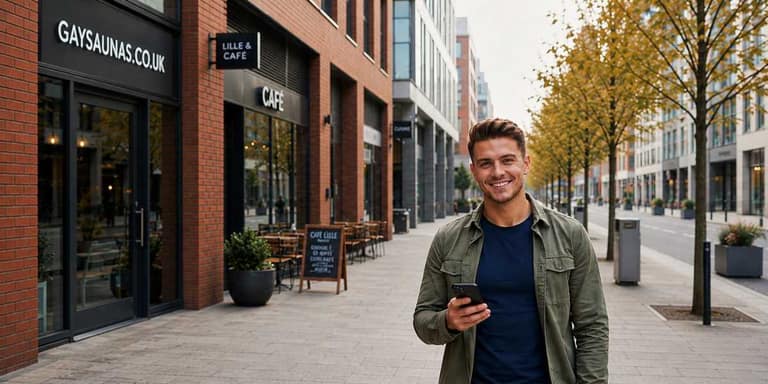
Find Gay Saunas Across the UK
Find nearby venues to easily compare opening times, entry prices and facilities. Results are automatically sorted by distance.
Latest venue checks 02 | 08 | 2026Location data is never stored.
No location selected yet.
Updated Hourly
Most Viewed
See which saunas are attracting the most attention right now.
The Sauna Reports
First visit guides
New to saunas? Start here.

How to Prepare for Your First Gay Sauna Visit | UK Guide
Why read it: Everything to sort before your first gay sauna visit: sexual health, what to pack, body confidence, timing, and nerves. Plain-spoken UK answers.

Who Can Go to a Gay Sauna?
Why read it: Gay saunas welcome all men — gay, bi, curious, or questioning. UK guide covering trans inclusion, disability access, body image, HIV, and what to expect.

Arriving at a Gay Sauna: What Happens in the First 15 Minutes
Why read it: Step-by-step guide to your first 15 minutes at a UK gay sauna — from buzzer to locker to towel. Know exactly what happens at check-in.

Gay Sauna Facilities Explained: What Every Room Is For | UK Guide
Why read it: What every room in a UK gay sauna is for — from steam rooms and jacuzzis to dark rooms, glory holes, and sling rooms. Full facility guide series.

Gay Sauna Etiquette and Consent
Why read it: Master UK gay sauna etiquette and consent culture—from non-verbal signals to handling rejection. The unwritten rules that make shared intimate space work.

Health & Safety at Gay Saunas: The 2026 UK Guide
Why read it: PrEP, doxyPEP, vaccines, testing, consent, heat safety and chemsex — the complete UK health and safety guide for gay sauna visitors. Updated March 2026.
The basics
What Is a Gay Sauna?
A gay sauna - also called a men's sauna, male sauna, or gay bathhouse - is a private venue for men who have sex with men. Every UK gay sauna includes wet facilities like steam rooms, dry saunas, and showers.
These venues are open to gay, bisexual, bi-curious, and questioning men. You don't need to identify as anything to visit.
Good to know
Common Questions
Do you have to be gay?
No. UK gay saunas welcome men of all sexual orientations - gay, bisexual, bi-curious, and questioning. No venue asks you to identify or explain yourself.
Can you go on your own?
Yes - most people do. Venues are designed for solo attendance: single-occupancy lockers, individual towels, no plus-one required.
Do you have to have sex?
No. Sexual activity is available but never expected, required, or assumed. Many visitors use only the wet facilities - steam rooms, saunas, jacuzzis.
What do you need to bring?
Photo ID and a way to pay. Most venues provide a towel, locker, and basic toiletries with your entry fee. You're in control the entire time.
Browse venues
Directory
Primary
Home & Search
The UK’s gay sauna directory and guide. Verified opening times, prices and reviews for every venue, plus clear guides on etiquette, consent and sexual health.
Primary
Find a sauna
Find the nearest gay sauna to your location right now. Our live UK locator covers the whole of the UK — see opening hours, entry prices and facilities.
Directory
Every gay sauna in the UK
The most comprehensive directory of gay saunas across England, Scotland, Wales, and Northern Ireland. Current prices, opening hours, facilities…
Guides
All Sauna Guides
New to the scene? Our comprehensive gay sauna guides cover everything from what to pack and locker room etiquette to consent, safety, and overcoming nerves.
More
Sauna FAQs
Clear beginner answers about what gay saunas are, what to bring, consent, boundaries, hygiene, safer sex and first-time nerves.
More
About us
Gaysaunas.co.uk is the UK’s free, private gay sauna directory — verified prices, reviews, a live locator, and beginner guides. No sign-up needed.
More
Events
Browse UK gay sauna event brands and organisers in one place, with direct links to their own websites for current dates, tickets and details.
More
Add/Update a Sauna
Get in touch with GaySaunas.co.uk for venue listing updates, event organiser enquiries, advertising and editorial feedback. UK-based directory.
Homepage linked
Privacy
This Privacy Policy describes how GaySaunas.co.uk (“we”, “us”, or “our”) collects, uses, and shares your personal information when you visit our website.
Homepage linked
Terms
This Terms & Conditions agreement is designed for a directory and review site like GaySaunas.co.uk. It clarifies that you provide information only and are not responsible for the actual operation of the venues listed.
Guides
Advanced Sauna Advice
Beyond the basics: honest UK advice on sauna costs, body confidence, disability access, trans inclusion, couples, and knowing when your pattern needs a reset.
Guides
After Your Visit
Your after-visit checklist: PEP timelines, STI testing windows, emotional aftercare, and UK support. A practical guide from people who know.
Guides
Arriving at a Gay Sauna
Step-by-step guide to your first 15 minutes at a UK gay sauna — from buzzer to locker to towel. Know exactly what happens at check-in.
Guides
Etiquette and Consent
Master UK gay sauna etiquette and consent culture—from non-verbal signals to handling rejection. The unwritten rules that make shared intimate space work.
Guides
Gay Sauna Facilities
What every room in a UK gay sauna is for — from steam rooms and jacuzzis to dark rooms, glory holes, and sling rooms. Full facility guide series.
Guides
Going Alone or With a Friend
Most gay sauna visitors go alone. Find out how to decide between solo and with a friend, what each option actually involves, and how to prepare.
Guides
Health and Safety
PrEP, doxyPEP, vaccines, testing, consent, heat safety and chemsex — the complete UK health and safety guide for gay sauna visitors. Updated March 2026.
Guides
History of Gay Saunas
UK gay saunas were built under threat of prosecution and survived the AIDS crisis. How they got here — and why they still matter.
Guides
Who’s Welcome at Gay Saunas
Gay saunas welcome all men — gay, bi, curious, or questioning. UK guide covering trans inclusion, disability access, body image, HIV, and what to expect.
Guides
Preparing for Your First Visit
Everything to sort before your first gay sauna visit: sexual health, what to pack, body confidence, timing, and nerves. Plain-spoken UK answers.
Guides
Sexual Health Resources
Verified UK sexual health services, crisis helplines, PrEP access, and LGBT+ support for gay and bisexual men. Free NHS clinics, testing, and vaccinations.
Homepage linked
England 34 venues
From multi-floor complexes in London and Manchester to well-established local favourites in Birmingham, Leeds, Brighton, and beyond. Every venue listed with…
Homepage linked
Birmingham
Two venues in Birmingham. Just For YOU in the Jewellery Quarter and Spartan Health Club in Erdington, both verified with current prices, hours, and facilities.
Homepage linked
Blackpool
Two venues in Blackpool town centre. Acqua Sauna and W3 Sauna, both verified with current prices, hours, and facilities.
Regions
East Midlands
Explore the best gay saunas in the East Midlands for 2026. Get up-to-date entry prices, opening hours, and venue reviews for Nottingham, Leicester, Derby…
Homepage linked
Leeds
Find your nearest Leeds gay sauna instantly—complete listings, snapshot reviews & over 100 expert guides for safer, steamy fun at GaySaunas.co.
Regions
London
Six venues across Soho, Covent Garden, Waterloo, Kennington and East London. Every listing verified with current prices, hours…
Regions
North East
Two venues serving the North East region: Number 52 Sauna in Newcastle and Greenhouse Sauna in Luton. Every listing verified with current prices, hours…
Regions
North West
Eight venues across Manchester, Blackpool, Merseyside, Bury, Shaw, Northwich and Carlisle. Every listing verified with current prices, hours, and facilities.
Regions
South East
Explore the best gay saunas in South East England with our 2026 guide. Find latest entry prices, opening hours, and reviews for venues in Brighton, Hove…
Regions
South West
Four venues across Plymouth, Bournemouth, Torquay, and Swindon. Every listing verified with current prices, hours, and facilities.
Yorkshire & Humberside
South Yorkshire
Sheffield’s only gay sauna — The Boiler Room at 208 Savile Street East. Formerly Bronx Sauna, fully refurbished and operating across two floors.
M–S
Sheffield
Visit Boiler Room Sauna, a gay sauna in Sheffield. Access 2026 visitor information including open times, prices, maps & reviews.
Regions
West Midlands
Four venues across Birmingham, Stourbridge, and Darlaston — from a compact city-centre bar sauna in the Jewellery Quarter to the Midlands’ largest gay sauna…
Yorkshire & Humberside
West Yorkshire
Two venues serving the region — Steam Complex in Leeds and Plastic Ivy in Dewsbury. Every listing verified with current prices, hours, and facilities.
Homepage linked
Northern Ireland 1 venue
Explore the premier gay sauna in Northern Ireland for 2026. Get the latest entry prices, opening hours, and venue details for Outside Sauna in Belfast.
Yorkshire & Humberside
Scotland
Explore the top gay saunas in Scotland for 2026. Get up-to-date entry prices, opening hours, and venue reviews for Glasgow’s Pipeworks and Edinburgh’s…
Yorkshire & Humberside
Wales
Greenhouse Sauna in Newport is Wales’ only dedicated gay sauna. Full listing with current prices, opening hours, and facilities verified for 2026.
Blackpool
Acqua Sauna Blackpool
Verified on 2 Aug 2026. Latest prices, opening times, events, facilities and reviews.
Manchester
Basement Complex Manchester
Verified on 2 Aug 2026. Latest prices, opening times, events, facilities and reviews.
Mansfield
Club Zeus Sauna Mansfield
Verified on 2 Aug 2026. Latest prices, opening times, events, facilities and reviews.
London
Covent Garden Health Spa London
Verified on 2 Aug 2026. Latest prices, opening times, events, facilities and reviews.
New Brighton
Dolphin Sauna Merseyside
Verified on 2 Aug 2026. Latest prices, opening times, events, facilities and reviews.
London
E15 Club London
Verified on 2 Aug 2026. Latest prices, opening times, events, facilities and reviews.
Hull
Gentry Spa Hull
Verified on 2 Aug 2026. Latest prices, opening times, events, facilities and reviews.
Newport
Greenhouse Gay Sauna Newport
Verified on 2 Aug 2026. Latest prices, opening times, events, facilities and reviews.
Luton
Greenhouse Sauna Luton
Verified on 2 Aug 2026. Latest prices, opening times, events, facilities and reviews.
Stourbridge
Heroes Sauna Stourbridge
Verified on 2 Aug 2026. Latest prices, opening times, events, facilities and reviews.
Birmingham
Just For You Birmingham
Verified on 18 Jul 2026. Latest prices, opening times, events, facilities and reviews.
2 Union Street
Manticore Spa Plymouth
Verified on 2 Aug 2026. Latest prices, opening times, events, facilities and reviews.
Medway
ME1 Sauna Rochester
Verified on 2 Aug 2026. Latest prices, opening times, events, facilities and reviews.
Bury
Neros Sauna Bury
Verified on 2 Aug 2026. Latest prices, opening times, events, facilities and reviews.
Newcastle
Number 52 Sauna Newcastle
Verified on 2 Aug 2026. Latest prices, opening times, events, facilities and reviews.
Belfast
Outside Sauna Belfast
Verified on 2 Jul 2026. Latest prices, opening times, events, facilities and reviews.
Shaw
Pennine Sauna
Verified on 2 Jul 2026. Latest prices, opening times, events, facilities and reviews.
Leeds
Pipeworks Leeds
Verified on 2 Jul 2026. Latest prices, opening times, events, facilities and reviews.
Eastborough
Plastic Ivy Sauna Dewsbury
Verified on 2 Aug 2026. Latest prices, opening times, events, facilities and reviews.
London
Pleasuredrome Gay Sauna London
Verified on 2 Aug 2026. Latest prices, opening times, events, facilities and reviews.
London
Sailors Sauna London
Verified on 2 Aug 2026. Latest prices, opening times, events, facilities and reviews.
Northwich
Sauna Sauna Northwich
Verified on 2 Aug 2026. Latest prices, opening times, events, facilities and reviews.
Bournemouth
SaunaBar Bournemouth
Verified on 2 Aug 2026. Latest prices, opening times, events, facilities and reviews.
Birmingham
Spartan Club Birmingham
Verified on 2 Jul 2026. Latest prices, opening times, events, facilities and reviews.
Leicester
Splash Spa Leicester
Verified on 2 Aug 2026. Latest prices, opening times, events, facilities and reviews.
Rock Road
Steamer Quay Sauna Torquay
Verified on 2 Aug 2026. Latest prices, opening times, events, facilities and reviews.
Edinburgh
Steamworks Gay Sauna Edinburgh
Verified on 18 Jul 2026. Latest prices, opening times, events, facilities and reviews.
Nelson Street
Sweat Sauna Carlisle
Verified on 2 Aug 2026. Latest prices, opening times, events, facilities and reviews.
London
Sweatbox Soho London
Verified on 2 Aug 2026. Latest prices, opening times, events, facilities and reviews.
Hove
The Boiler Room Sauna Brighton
Verified on 2 Aug 2026. Latest prices, opening times, events, facilities and reviews.
Brighton
The Brighton Sauna
Verified on 2 Aug 2026. Latest prices, opening times, events, facilities and reviews.
Darlaston
The Greenhouse Sauna Darlaston
Verified on 2 Aug 2026. Latest prices, opening times, events, facilities and reviews.
London
The Locker Room Gay Sauna London
Verified on 2 Aug 2026. Latest prices, opening times, events, facilities and reviews.
Glasgow
The Pipeworks Glasgow
Verified on 2 Aug 2026. Latest prices, opening times, events, facilities and reviews.
9 Henry St
Touch Sauna Swindon
Verified on 2 Aug 2026. Latest prices, opening times, events, facilities and reviews.
Portsmouth
Tropics Day Spa, Portsmouth
Verified on 2 Aug 2026. Latest prices, opening times, events, facilities and reviews.
Blackpool
W3 Sauna Blackpool
Verified on 2 Aug 2026. Latest prices, opening times, events, facilities and reviews.
Huddersfield
Empire Cinema Club Huddersfield
Verified on 2 Aug 2026. Latest prices, opening times, events, facilities and reviews.
Guides
Arriving at a Gay Sauna: What Happens in the First 15 Minutes
Step-by-step guide to your first 15 minutes at a UK gay sauna — from buzzer to locker to towel. Know exactly what happens at check-in.
Guides
Gay Sauna Etiquette and Consent
Master UK gay sauna etiquette and consent culture—from non-verbal signals to handling rejection. The unwritten rules that make shared intimate space work.
Guides
Cruising Mazes in Gay Saunas: What to Expect (UK Guide)
What a cruising maze is, how they work, unwritten rules, and which UK gay saunas have them. A practical guide for first-timers and regulars.
Guides
Dark Rooms in Gay Saunas: What to Expect (UK Guide)
What a dark room is, how consent works in the dark, unwritten rules, and which UK gay saunas have them. A practical guide for first-timers and regulars.
Guides
Dungeons in Gay Saunas: UK Guide to Kink & Fetish Rooms
What a dungeon in a UK gay sauna is, what equipment to expect, how play starts, the unwritten rules, and which venues have dungeon facilities.
Guides
Glory Holes in Gay Saunas — What They Are & How They Work
What glory holes are, why men use them, what to expect, and the unwritten rules. A practical guide to glory hole etiquette in UK gay saunas.
Guides
Glory Holes in Gay Saunas: Safe Etiquette Guide
Navigate glory holes in gay saunas safely with tips on consent, signalling, and hygiene—perfect for UK men seeking discreet, respectful anonymous play in…
Guides
Jacuzzis in Gay Saunas — What to Expect and How They Work
What the jacuzzi is for in a UK gay sauna, unwritten rules, what’s OK in the water, and which venues stand out. Practical guide for all visitors.
Guides
Private Cabins in Gay Saunas: What to Expect (UK Guide)
What private cabins in UK gay saunas are, how they work, door signals, and which venues offer them. A practical guide for all experience levels.
Guides
Sling Rooms in Gay Saunas: What to Expect (UK Guide)
What a sling room is, how consent works, unwritten rules, and which UK gay saunas have them. A practical guide for first-timers and regulars…
Guides
Steam Rooms in Gay Saunas: What to Expect (UK Guide)
What the steam room in a UK gay sauna is actually like — how it works, what happens, cruising signals, and which venues have one.
Guides
Gay sauna facilities explained
What every room in a UK gay sauna is for — from steam rooms and jacuzzis to dark rooms, glory holes, and sling rooms. Full facility guide series.
Guides
Going alone or with a friend?
Most gay sauna visitors go alone. Find out how to decide between solo and with a friend, what each option actually involves, and how to prepare.
Guides
Gay sauna facilities explained
What every room in a UK gay sauna is for — from steam rooms and jacuzzis to dark rooms, glory holes, and sling rooms. Full facility guide series.
Guides
How to Prepare for Your First Gay Sauna Visit
Everything to sort before your first gay sauna visit: sexual health, what to pack, body confidence, timing, and nerves. Plain-spoken UK answers.
Guides
UK Sexual Health & Support Resources for Gay & Bi Men
Verified UK sexual health services, crisis helplines, PrEP access, and LGBT+ support for gay and bisexual men. Free NHS clinics, testing, and vaccinations.
Guides
What to Do After Your Visit
Your after-visit checklist: PEP timelines, STI testing windows, emotional aftercare, and UK support. A practical guide from people who know.
CONSENT GUIDE · UK GAY SAUNAS · SPECIALIST SUPPORT HELPLINES
Gay Sauna Etiquette and Consent
Master UK gay sauna etiquette and consent culture—from non-verbal signals to handling rejection. The unwritten rules that make shared intimate space work.
In brief
- Consent is the absolute baseline It must be affirmative, ongoing, and can be withdrawn at any time. In a sauna, this is mostly negotiated through non-verbal checkpoints like eye contact and reciprocal touch. You are always entitled to move at your own pace and leave whenever you wish.
- Body language is the default, but words matter too The “code of silence” is a convention, not a commandment. Using your voice to check interest, set boundaries, or confirm comfort before escalation is a sign of respect — not a disruption. A brief, clear “no thanks” is a complete sentence.
- Hygiene and discretion are foundational Shower before using wet areas and keep your phone locked away. If your boundaries are crossed, speak to staff immediately. Galop (0800 999 5428) and SurvivorsUK (0808 801 0332) offer confidential, specialist help for MSM.
01 What You’re Walking Into — Understanding the Space Before You Arrive
Why Gay Saunas Operate the Way They Do
The culture inside a gay sauna didn’t appear from nowhere. It developed over decades in response to specific pressures that shaped how men who have sex with men socialised, found each other, and managed risk.
For much of the twentieth century, sex between men was criminalised in the UK, and even after partial decriminalisation in 1967, the social and legal environment remained hostile well into the 1990s and beyond. Bathhouses and saunas became spaces where men could meet with a degree of privacy and anonymity that pubs, clubs, and public spaces couldn’t offer.
That history shaped two features of sauna culture that still define it today. The first is discretion: many venues have unmarked entrances, strict phone bans, and policies designed to protect the identity of every visitor. The second is what some venues call the “code of silence” — the convention that most communication, including the negotiation of sexual interest, happens non-verbally.
This wasn’t a stylistic choice. It was a practical adaptation to environments where being overheard or identified could have serious consequences.
Understanding this context matters because it explains why saunas feel different from other social or sexual settings. The quietness, the reliance on body language, the emphasis on anonymity — these aren’t arbitrary customs. They’re the architecture of a venue designed to let men be themselves safely. Modern UK saunas operate in a very different legal climate, but the culture retains its roots. These are places where discretion and respect for others’ privacy are foundational, not optional.
It’s also worth understanding that a gay sauna is two things at once. It’s a wellness facility — showers, steam rooms, dry saunas, jacuzzis, and usually a café or lounge area — and it’s a sexualised environment where men may seek sexual contact with other men. Neither purpose overrides the other. You’re not obligated to do anything sexual simply by being there, and nobody is obligated to treat it as purely recreational. Your visit is defined by what you choose to do, not by what the venue makes available. For a detailed guide to what each room and facility is designed for, see Gay Sauna Facilities Explained: What Every Room Is For.
The Unwritten Rules and Why Each One Exists
Every sauna has its own house rules, usually displayed at reception or in the changing area. The conventions below are broadly consistent across UK venues, and what makes them easier to follow is understanding the reasoning behind each one rather than memorising them as a list.
Hygiene is the most universal expectation. You’ll be asked to shower before using any communal wet area — steam rooms, saunas, jacuzzis — even if you showered at home before arriving. This isn’t about doubting your cleanliness; it’s a practical measure to keep shared water and surfaces sanitary for everyone. Sitting on your towel rather than directly on wooden or tiled benches is standard, and in many venues it’s compulsory for saunas. If you engage in sexual activity, showering again before returning to communal areas is both considerate and widely expected.
Phone and camera rules are strictly enforced in almost every UK venue. Using your phone in changing areas, wet areas, or play areas is typically prohibited outright, and taking photographs or video can result in immediate removal and, in serious cases, a report to the police. Beyond venue policy, covert recording of someone engaged in a private act is a criminal offence under Section 67 of the Sexual Offences Act 2003, which covers voyeurism. The Data (Use and Access) Act 2025 has since made it a criminal offence to create non-consensual intimate images of another person — including through AI — strengthening the legal framework further.
The phone ban exists to protect every visitor’s right to anonymity. Many men who visit are not out to their families, friends, or workplaces. Others work in roles where being identified in a sexual setting could have professional consequences. The simplest way to comply is to put your phone in your locker when you arrive and leave it there until you leave.
Towel etiquette functions as a subtle form of communication. Most venues provide a towel with your entry fee, and wearing it around your waist is the default. The towel acts as a kind of baseline: keeping it on signals that you’re comfortable but not necessarily inviting contact, while how and where you wear it (or don’t) can indicate different levels of openness. If you’re unsure, keeping your towel on until you’ve had time to observe how others use the venue is a reasonable approach.
Conversation norms vary by area within the venue. Cafés and lounges are the most openly social areas — normal conversation, introductions, and relaxed chat are all common, and many men use these as a low-pressure way to get comfortable before moving elsewhere. Changing rooms tend to be more functional; brief, practical exchanges are fine, but long or loud conversations can feel intrusive. Steam rooms and dry saunas are usually quieter, and it’s worth reading the room before talking at length. Dark rooms and private play areas are generally not places for conversation that draws attention to what others are doing. If you need to discuss boundaries, safer sex, or logistics with someone, it’s better to do so in a more neutral area first.
Private and public play areas follow different but equally important conventions. If a venue has private cabins, those are intended to offer seclusion — looking over walls, peering through gaps in doors, or knocking uninvited violates that privacy. Public play areas are where sexual activity may be visible to others, but being in a public area does not mean anyone can touch you without consent. The distinction between “visible” and “available” is important.
02 How Consent Actually Works When Nobody’s Talking
The Non-Verbal Consent Framework
In most everyday sexual contexts — dates, hookups arranged through apps, encounters that begin with conversation — consent is negotiated at least partly through words. In a sauna, the primary language of consent is non-verbal. This can feel unfamiliar, but it follows a clear and logical structure once you understand how it works.
The process is sequential and incremental. Each step functions as a checkpoint where both people can opt in or opt out before anything escalates further.
The first stage is eye contact. If you notice someone you’re interested in, you look at them. If they’re interested, they’ll hold your gaze rather than looking away quickly. Sustained, mutual eye contact — not a passing glance, but a deliberate look that’s returned — is the first signal of potential interest. If they break eye contact immediately, look away repeatedly, or don’t engage, that’s a signal to move on.
The second stage adds warmth. A relaxed smile, combined with that sustained eye contact, moves the interaction from “I’ve noticed you” to “I’m open to more.” If the smile is returned, that’s a second positive signal. If their expression stays neutral or they look away, the answer is probably no.
The third stage is proximity. If eye contact and a smile have been exchanged, one of you may move closer — sitting nearer on a bench, shifting position in a steam room, standing at a closer distance. This should be gradual and should leave the other person room to move away if they choose to. Moving directly into someone’s personal space without these earlier signals is not an approach; it’s an imposition.
The fourth stage involves light, non-sexual touch — a hand placed briefly on a shoulder, a foot making contact in a jacuzzi, a casual brush of a leg. The key word is “non-sexual”: this stage is about testing whether physical proximity is welcome, not about initiating sexual contact. If the other person reciprocates with similar touch, leans into it, or moves closer, that’s a positive signal. If they pull away, move their body, or remove your hand, that’s a clear signal to stop.
Only after these stages have been navigated — and only if each one has been met with a reciprocal response — does escalation towards sexual contact become appropriate. Even then, consent continues to operate on an ongoing basis. It can be given for one thing and not another, and it can be withdrawn at any time. At any point where you’re uncertain whether the person is genuinely engaged or merely tolerating contact, the correct response is to pause or stop.
This sequential model exists for a practical reason: it allows two people to negotiate interest and boundaries without either one needing to make a grand, vulnerable declaration. Each step is small enough that opting out carries minimal awkwardness. A system where saying “no” is easy is a system where saying “yes” means something.
Peer-reviewed research consistently supports what experienced sauna visitors already know: non-verbal behaviours are the dominant mode of consent communication among men who have sex with men. Beres, Herold, and Maitland (2004), in a study published in Archives of Sexual Behavior, found that participants in same-sex relationships reported using non-verbal behaviours significantly more frequently than verbal behaviours to indicate consent. Two decades later, Webber et al. (2024) confirmed this finding in a scoping review of thirty studies on GBTQ men’s consent practices, noting that the same pattern of non-verbal-dominant consent communication remains prevailing among MSM.
When to Break the Silence and Use Words
Non-verbal communication works well for the early stages of an encounter — establishing mutual interest, gauging comfort, and initiating light contact. But there are specific moments where words become important, and using them is a sign of confidence and respect, not a disruption of the atmosphere. The “code of silence” is a cultural convention, not a rule.
Before penetrative sex, a verbal check-in is strongly advisable. Agreeing on what both people want, discussing safer sex (condom use, PrEP status), and confirming that the encounter is heading somewhere both people are comfortable with is far easier to do with words than with gestures. This conversation doesn’t need to be long or formal. “Want to go somewhere more private?”, “Are you into this?”, “I’ve got condoms — are we using one?” are all short, direct, and clear.
When moving to a private cabin, stating what you’re open to — and what you’re not — before the door closes avoids misunderstandings that are harder to resolve once things are under way. “I’m up for oral but not into anal” or “I’m happy to play but I don’t kiss” are the kind of boundaries that are much easier to set verbally than to communicate through body language in a dark, enclosed room.
When something feels ambiguous — when you genuinely can’t tell whether the other person is interested or simply being polite, when body language signals are mixed, when you sense hesitation — asking a simple question resolves the ambiguity immediately. “Is this alright?” or “Do you want to carry on?” gives the other person an explicit opportunity to say yes, no, or suggest something different.
The situations where words are most needed are precisely the situations where relying solely on body language carries the most risk. Using your voice when it matters is a sign that you understand the environment well enough to know when non-verbal cues aren’t sufficient.
Signals of Interest vs. Signals of Disinterest
Reading body language in a steam room or a dimly lit corridor is not the same as reading it across a well-lit bar. Signs that someone is likely interested include: eye contact that is held deliberately and returned more than once; a genuine, relaxed smile directed at you; movement towards you when they had other options for where to sit or stand; open body language — facing towards you, arms relaxed, posture engaged rather than closed off; and reciprocal touch, where they respond to light contact by maintaining it or initiating their own.
Signs that someone is likely not interested include: breaking eye contact quickly and not returning it; turning their body away from you or angling their shoulders in the opposite direction; moving to a different seat, bench, or area shortly after you approach; neutral or one-word responses to any conversation you attempt; and pulling away from touch, removing your hand, or physically creating distance.
Brief eye contact without any particular expression, sharing a bench in a crowded steam room because it’s the only available seat, polite small talk about the facilities — these are not invitations, but they’re not refusals either. They’re simply people using a shared venue. Interpreting neutral behaviour as interest is one of the most common missteps, particularly for men who are new to the environment.
When you genuinely can’t read the situation, default to the lighter end of interaction. If that’s returned, take one further step. If it isn’t, or if the response is ambiguous, treat it as a “not now” and move on. Missing a possible connection is always preferable to making someone feel uncomfortable or pressured.
03 Saying No, Hearing No, and Why Both Are Skills
How to Decline — And Why You Don’t Owe an Explanation
Being approached by someone you’re not interested in is a normal, frequent part of being in a sauna. It doesn’t require a complicated response, and it certainly doesn’t require an apology or an excuse.
The simplest verbal declines are also the most effective: “No thanks”, “Not for me”, “I’m just here to relax tonight.” These are complete sentences. They don’t need to be followed by a reason, a justification, or a softening phrase like “maybe later” — unless you genuinely mean it. Offering a vague “maybe” to be polite often creates more confusion than a clean, brief “no.”
Non-verbal declines work in the earlier stages of an interaction. Breaking eye contact, turning your body away, relocating to a different area — these are well-understood signals among experienced sauna visitors.
In a sexualised environment, the instinct to soften refusals can be genuinely risky, because staying still, tolerating unwanted contact, or saying nothing can be misread as passive consent. Vague responses — saying “maybe in a bit” when you mean “no,” smiling apologetically, staying put rather than moving away — leave the other person waiting, watching, and eventually re-approaching. A clean “no” ends the interaction for both of you. It might feel blunt, but it’s the most respectful thing you can do — for them and for yourself.
Withdrawing consent after something has already started is equally valid. You might begin an encounter and then feel differently — about the person, about the activity, about the situation. That’s your right at any point. “I want to stop,” “I’ve changed my mind,” or “I’m going to leave it there” are all clear ways to communicate this. You don’t need to explain further.
How to Handle Being Told No
Rejection in a sexual context can sting, and pretending otherwise would be dishonest. But understanding why rejection is a routine, healthy, and structurally necessary part of how saunas function can make it considerably easier to handle.
In a venue where many men are present, many are making and receiving approaches, and most encounters don’t progress beyond the first couple of stages. This is by design. The whole system of incremental, non-verbal negotiation exists precisely so that most “nos” can happen early, quietly, and with minimal awkwardness. A declined glance, a turned shoulder, a brief “not for me” — these aren’t personal attacks. They’re the filtering mechanism that allows a room full of strangers with different tastes, moods, and intentions to coexist without constant friction.
The correct response to being turned down is brief and physical: acknowledge it (a small nod, a quiet “no worries”), and then move away. Not to the other end of the same bench — away. Give the person their personal space and give yourself a reset. Don’t follow them. Don’t hover nearby. Don’t return to try again ten minutes later unless they’ve given you a clear, new signal of interest.
If you realise you’ve misread a signal — you touched someone who wasn’t interested, you moved closer to someone who was trying to create distance — a short apology is the right response. “Sorry, I misread that” communicates self-awareness and respect. Say it, step back, and let the interaction end there. Don’t argue about whether the signals were clear. Learning from the moment and adjusting your behaviour is what makes you a more considerate visitor over time.
When Someone Doesn’t Take No for an Answer
If you’ve said no — verbally or through clear body language — and the person persists, that’s no longer an awkward moment; it’s a boundary violation, and you have every right to escalate. Repeat your refusal firmly and audibly. If they continue, move away from them physically. Then speak to a member of staff: tell them what happened, where it happened, and describe the person as clearly as you can.
Reporting matters even when the incident feels minor. A single instance of persistent unwanted contact might seem manageable on its own, but staff can only identify patterns of behaviour if they receive multiple reports. The man who ignored your “no” may have ignored someone else’s before you, and may do so again after. Reporting creates a record that protects not just you but the people who come after you.
A venue where men feel safe saying “no” is a venue where “yes” carries real weight. Every time you handle rejection gracefully, you contribute to an environment where consent is meaningful rather than pressured. That benefits everyone in the building, including you.
04 How Different Spaces Shape What Consent Looks Like
Different areas within a sauna carry different conventions, and understanding what each one is designed for helps you choose the right one for what you’re comfortable with.
Dark rooms are purpose-built areas where sexual activity is expected rather than incidental. Some venues state explicitly that entering a dark room implies consent to anonymous, non-penetrative sexual contact. Even where that convention applies, it does not mean you’ve consented to everything that could happen in that room. Consent still operates on a per-person, per-act basis. Under Section 74 of the Sexual Offences Act 2003, consent requires agreeing by choice while having the freedom and capacity to make that choice. Your physical location in a building doesn’t override that.
You can enter a dark room, experience contact you’re not comfortable with, and leave immediately. Leaving is withdrawing consent, and it doesn’t require an explanation. If you’re not sure what a specific venue’s conventions are for their dark room, ask staff before you go in — that’s a perfectly reasonable question, and they’ll have answered it a hundred times before.
Glory holes typically carry an implied consent convention for specific anonymous sexual contact. If you use one, understand what that convention involves, and know that you can stop and walk away at any point.
Private cabins are designed for seclusion — looking over walls, peering through gaps in doors, or knocking uninvited violates that privacy. Public play areas mean your activity may be visible to others, but “visible” does not mean “available.” Being in a public area does not give anyone permission to touch you without your consent.
The bottom line across all areas: choose the one that matches your comfort level, and know that consent applies everywhere regardless of the room you’re standing in. For a comprehensive walkthrough of what each room and facility is designed for, see Gay Sauna Facilities Explained: What Every Room Is For.
05 Substances, Intoxication, and Capacity to Consent
Chemsex, Alcohol, and What UK Law Actually Says
Some UK gay saunas serve alcohol. Some visitors arrive having used recreational drugs. Chemsex — the use of specific drugs (most commonly GHB/GBL, mephedrone, and crystal methamphetamine) to facilitate, enhance, or prolong sexual activity — is a reality in parts of the MSM community, and its presence in or around some sauna settings is documented. None of this is a reason to avoid saunas, but it is a reason to understand how intoxication affects consent, both legally and practically.
Under Section 74 of the Sexual Offences Act 2003, consent is defined as agreeing by choice while having “the freedom and capacity to make that choice” (legislation.gov.uk). The critical word is “capacity.” A person who has consumed alcohol or drugs is not automatically unable to consent — the law recognises that people can make valid decisions while under the influence of substances.
The Court of Appeal addressed this directly in R v Bree [2007] EWCA Crim 804, clarifying that voluntary intoxication does not automatically negate capacity to consent. But the principle is clear: when intoxication reaches the point where a person can no longer understand what is happening, weigh the decision, or communicate their choice, they have lost the capacity to consent. At that point, any sexual activity with them is, in law, non-consensual. The Crown Prosecution Service guidance on this point is explicit: prosecutors are directed to consider whether the complainant had the capacity to consent, taking into account the effect of alcohol or drugs on their ability to make a free choice.
If you’re in a sauna and considering a sexual encounter with someone who has been drinking or using substances, the question to ask yourself is not “have they technically said yes?” but “are they in a state where their yes is meaningful?” If there’s genuine doubt, the answer is to wait. For detailed guidance on chemsex support services and what to do if substance use complicates your visit, see What to Do After Your Gay Sauna Visit.
Recognising When Someone Cannot Consent
In practical terms, there are observable indicators that someone may have lost the capacity to consent. These include slurred or incoherent speech, difficulty maintaining balance or coordination, confusion about where they are or who they’re with, inability to respond coherently to simple questions, and drifting in and out of consciousness. Any one of these should be treated as a reason not to engage sexually with that person.
If you encounter someone in a sauna who appears to be in this state, the appropriate response goes beyond simply not engaging with them yourself. If you’re concerned about their safety — because they’re in a vulnerable position in a play area, because they appear to be losing consciousness, because someone else seems to be taking advantage of their state — alerting staff is the right thing to do. Venue staff are trained to manage situations involving intoxicated visitors and can arrange appropriate support, from helping the person to a safe area to calling emergency services if necessary.
06 When Something Goes Wrong — Your Options and Your Rights
Inside the Venue: Reporting to Staff
If someone crosses your boundaries, start with directness. “Stop,” “No,” and “I don’t want this” are clear, unambiguous statements. Move your body away from the person. If you can leave the area, do so. You don’t need to stay and explain, negotiate, or give them a second chance.
Once you’re away from the situation, speak to a member of staff. Tell them what happened, where it happened, and describe the person involved as clearly as you can. Reputable venues take these reports seriously. Depending on the severity, staff may speak to the individual, issue a warning, remove them from the venue, or — in serious cases — contact the police.
If you witness someone else being harassed or in obvious discomfort, a simple intervention — “He said no” or “Are you alright, mate?” — can interrupt the situation. Whether or not you intervene directly, you can also inform staff and point out who was involved. Bystander action is one of the most effective tools for maintaining a safe environment, and it doesn’t require confrontation; it requires attention and a willingness to act.
After You Leave: External Support and Reporting
For more serious incidents — anything that felt like assault, anything that left you feeling unsafe or violated — support exists beyond the venue. A survey of over 600 LGBTQ+ people conducted by LGBT HERO found that 76% of respondents had experienced sexual assault, violence, or abuse; among those, 80% had been groped or touched without consent, and 68% had their sexual boundaries ignored. More than one in five (21%) had been sexually assaulted in an LGBTQ+ venue. These are not marginal figures, and knowing your options is genuinely important.
Galop is the UK’s specialist LGBT+ anti-abuse charity. Their national helpline (0800 999 5428) is staffed by people with specific experience supporting LGBT+ survivors of sexual violence, domestic abuse, and hate crime. They can talk through what happened, explain your options, and help you decide what steps, if any, you want to take next. Details of current hours are available at galop.org.uk.
SurvivorsUK runs the National Male and Non-Binary Survivors Helpline for men, boys, trans and non-binary people who have experienced sexual abuse at any time in their lives. You can reach them by phone on 0808 801 0332 (Monday to Friday, 10am to 12pm), by webchat at survivorsuk.org (Monday to Sunday, 12pm to 8pm), or by text and WhatsApp on 0786 003 1252 (Monday to Sunday, 12pm to 8pm). Their service is confidential.
NHS Sexual Assault Referral Centres (SARCs) are available across the UK and provide medical, practical, and emotional support to anyone who has been raped or sexually assaulted. You can access a SARC without reporting to the police, and they can carry out a forensic examination if you choose. You can find your nearest SARC through the NHS website or by calling 111.
The 24/7 Rape and Sexual Abuse Support Line, operated by Rape Crisis England and Wales, is available to all victims and survivors aged 16 and over, including men. You can call free on 0808 500 2222 at any time, day or night, or start a free online chat through their website.
Whether or not to report to the police is your decision. The reasons for under-reporting are well-documented and specific to MSM: fear of being outed, distrust of the police rooted in historical criminalisation, minimisation, shame, and concern about not being believed. These barriers are real. You have the right to report, and you have the right not to. What matters is that you know the option exists and that support is available regardless of which path you choose.
A sexualised environment does not reduce your right to consent. Being in a sauna, being naked, being in a dark room, having been interested in sex earlier in the evening — none of these things diminish the seriousness of what happened to you if your boundaries were crossed. If something felt wrong, it matters.
07 Visiting with a Partner, a Friend, or as Part of a Group
Attending a sauna with someone you know changes the dynamic in ways that are worth thinking about before you arrive rather than improvising on the night. The most important conversation happens before you walk through the door. If you’re attending with a partner, discuss in advance what you’re each comfortable with: are you there to play together, to play separately, to explore with others, or simply to enjoy the facilities? What would you each want to happen if one of you is approached by someone else? Is there a signal for “I’d like to leave”? These aren’t prescriptive questions with right answers — they’re questions where any answer is fine as long as both people agree on it beforehand.
The environment inside a sauna is designed for spontaneity with strangers, and it’s not a great setting for complex negotiations between people who already know each other and have feelings at stake.
Inside the venue, couples and groups should be mindful of how they use communal areas. Forming a tight, inward-facing cluster in a steam room or jacuzzi can make solo visitors feel excluded or unwelcome, even if that wasn’t your intention.
If you and your partner are open to others joining, make that clear to each other first, then communicate it to others through the usual non-verbal signals or, better yet, through a brief verbal invitation. If you prefer to keep things between the two of you, private cabins are the appropriate choice. Using a public area and then objecting to others showing interest is a mismatch between the area you’ve chosen and the boundary you’re trying to set.
For a dedicated treatment of how to approach this decision, including the pre-visit conversations worth having, see Going Alone vs. Going With a Friend to a Gay Sauna: How to Decide.
08 Venue Culture Varies — How to Read a Room You’ve Never Been In
Although the principles covered in this guide are consistent across UK gay saunas, the atmosphere and culture of individual venues can differ considerably. Some saunas are sociable and community-oriented, with a busy café, regular events, and a crowd that treats the place as much as a social club as a sexual one. Others are quieter, more anonymous, and more heavily focused on cruising and sexual encounters. Neither type is better or worse; they serve different needs and suit different preferences.
When you arrive at a venue for the first time, give yourself time to observe before deciding how to behave. Notice how men use the café area — is it a lively social hub or a quiet waiting room? Pay attention to how loud or quiet the steam rooms and wet areas are. Watch how people move through the building: are they lingering and socialising, or moving purposefully between play areas? Notice how staff interact with visitors. These cues will tell you more about the venue’s culture in ten minutes of observation than any amount of online research.
Many men try more than one venue over time, and this is worth doing. There’s no obligation to commit to a single venue, and experiencing more than one gives you a better sense of the range available and where you feel most comfortable. For venue-specific details including location, facilities, and opening times, visit the UK Gay Sauna Directory.
09 Why These Rules Actually Matter — The Bigger Picture
Everything in this guide — the etiquette, the consent framework, the advice on substances and reporting — connects to a single underlying principle: respect for the shared nature of the venue and the people in it.
A gay sauna works well when the men inside it look after themselves, pay attention to how their behaviour affects others, and accept that not everyone is there for the same reason. It works badly when individuals treat their own desires as the only thing that matters, when silence is exploited rather than respected, and when the vulnerability inherent in a sexualised environment is treated as an opportunity rather than a responsibility.
These venues serve a purpose that goes beyond recreation. For men who are not out, who lack access to other queer social environments, who are exploring their sexuality for the first time, or who simply want somewhere their desires are treated as normal rather than exceptional, a well-run sauna offers something genuinely valuable: somewhere you can be yourself without explanation.
Good etiquette is not a restriction on your enjoyment. It’s the foundation that makes enjoyment possible — for you and for every other man in the building. When people feel able to say yes and no freely, when privacy is protected, when hygiene is maintained, and when boundaries are respected, anxiety drops and trust rises.
You don’t need to be experienced to belong in a sauna. You don’t need to be confident, or attractive by any particular standard, or sure of what you want. You need to treat others — and yourself — with respect. Over time, the rest follows.
10 References
Beres, M.A., Herold, E. & Maitland, S.B. (2004). Sexual Consent Behaviors in Same-Sex Relationships. Archives of Sexual Behavior, 33(5), 475–486.
Crown Prosecution Service. Rape and Sexual Offences — Chapter 6: Consent. cps.gov.uk.
Data (Use and Access) Act 2025. legislation.gov.uk.
Howley, I. (2025). We Need to Talk About Consent. LGBT HERO. lgbthero.org.uk.
R v Bree [2007] EWCA Crim 804.
Sexual Offences Act 2003, s.67 (Voyeurism). legislation.gov.uk.
Sexual Offences Act 2003, s.74 (Consent). legislation.gov.uk.
Webber, V., McCready, S., Young, C., Dietzel, C., Eaton, A.D., McKie, R.M., Lowe, D.J. & Numer, M. (2024). Are Queer Men Queering Consent? A Scoping Review of Sexual Consent Literature Among Gay, Bisexual, Trans, and Queer Men. International Journal of Sexual Health. PMC11323870.
For UK sexual health information and support resources, visit our Sexual Health & Support Resources for Gay & Bi Men guide.
Media library
Media


Saved
Your saved items are kept on this device.
Save venues, guides and pages to build your shortlist.
More
Site tools
Static directory site · gaysaunas.co.uk
More page links